
Clear Packaging Plastics
Transparent packaging may use different resins and sheet constructions for folding or forming.
| Material decision | Specification to confirm |
|---|---|
Resin, sheet thickness and closure | Identify the resin and sheet thickness, together with the intended closing method. |
Folds, cavities and viewing areas | Review fold lines, cavities, viewing areas and the actual product fit. |
Contact suitability and temperature limits | Transparency does not establish the resin, food-contact suitability or temperature limits. |
Material requirements for the quotation
Identify the actual product, intended use and any existing pack or specification.
List quantities by version and the delivery destination. Record which choices still need a recommendation.
Standard MOQ: 500 pieces per style, size and artwork design. Special specifications and combined orders are assessed individually. Material and performance requirements are confirmed for the specific application.
Packaging options for this application
Custom Labels & Stickers
Printed identification and branding for the actual surface and application method.
Custom Clear Packaging
Transparent retail packaging with product-specific forming, folding and closure.
Folded versus formed Custom Clear Packaging
A folded clear box and a formed cavity need different dimensional and closing checks. Identify the resin and sheet thickness in both options. Clear appearance alone does not establish temperature limits or suitability for direct contact.
Material specification and supporting documents
Request the actual material reference and specification. Check only the processes used in the chosen pack, such as printing, gluing, folding, wrapping or forming. Discuss the relevant customization.
Approve fit and appearance on the complete construction. Review affected parts after a grade, layer, coating or attachment changes. Composition, contact and performance documents must cover the specified material or item and use conditions. Ask about documentation.
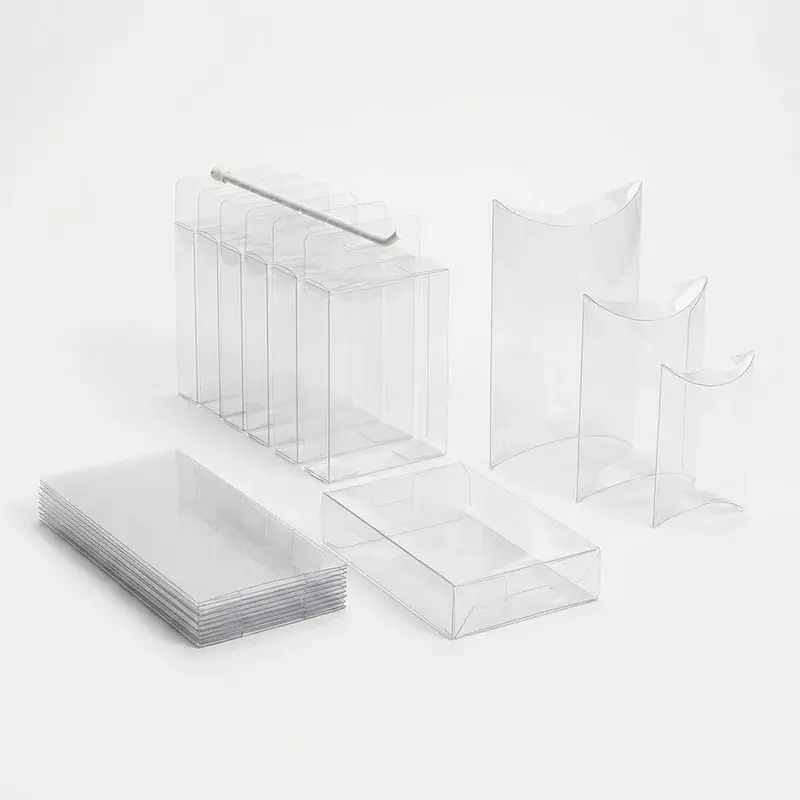
Transparent plastic after folding or forming
Transparency is an appearance requirement shared by different resins and conversions. Folding a sheet and forming a cavity impose different demands on the material.
Identify the resin and intended use, then review sheet thickness, folds or forming geometry, closure and printed areas together.
Sample review: folds, cavities and viewing areas
Inspect a converted sample for visibility, edges, whitening at folds and fit. Food-contact or temperature-related uses require information matching the actual use conditions.
Discuss Clear Packaging Plastics
Tell us where clear packaging plastics will be used in the package, the contents and the appearance or performance you need to review. Include the proposed structure or sample reference.
Clear Packaging Plastics FAQ
Identify the resin and sheet thickness, together with the intended closing method.
Review fold lines, cavities, viewing areas and the actual product fit.
No. Transparency does not establish the resin, food-contact suitability or temperature limits.