
Style reference. Size, materials and printing are customized for your order.
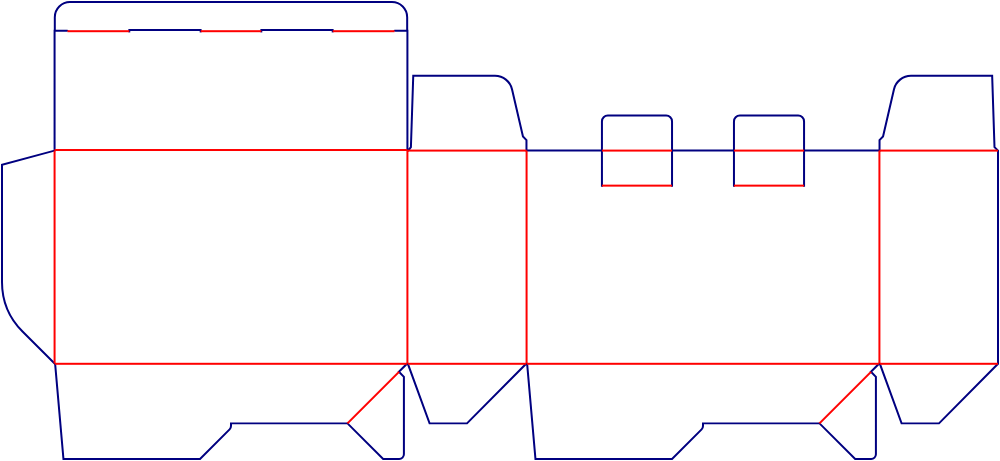
Custom Tuck-End Cartons with Diagonal Base Folds
Two small tabs sit opposite the top tuck flap. The broad bottom flaps have angled edges and diagonal fold lines, distinguishing this base layout from style E60110.
- Style reference
- E60109
- Structure
- Tuck-end carton · paired top tabs · diagonal base folds
- Dimensions
- Custom size, confirmed for your product
- Material
- SBS or kraft paperboard; grade and caliper to confirm
Size around your product.
Include closure clearance at the top and bottom of the packed product.
- L
- LengthThe left-to-right span of the chosen assembled reference face.
- W
- WidthThe front-to-back depth of the assembled product.
- H
- HeightThe bottom-to-top height in its intended presentation position.
State whether measurements describe the contents, usable internal space or outside of the carton. Include caps, wrapping and any insert when checking fit.
Add your target size
Your values appear on the diagram and in your inquiry. The reference drawing stays at its original proportions.
Design for the finished product.
Orient end-flap artwork for the direction in which that flap closes.
Choose the main viewing surface.
Orient end-flap artwork for the direction in which that flap closes.
Arrange the secondary information.
Check both locking tabs against their receiving cuts before placing nearby artwork.
Check the design against the approved layout.
Include closure clearance at the top and bottom of the packed product.
- Orient end-flap artwork for the direction in which that flap closes.
Prepare artwork on the approved production dieline at final size. Confirm bleed, print sides and safe margins before printing.
Request a production dielineTry your artwork on this reference
Select an area on the reference, add text or your logo, then adjust its direction and repeat pattern. Download a placement preview to include with your inquiry.
No target size added. Add your dimensions to include them in the preview.
Use the position fields as an alternative to dragging. Values are percentages of this reference image.
Loading the reference…
A placement concept, not a print-ready file. Confirm print sides, cutouts, glue areas and safe margins on your production layout. Your uploaded image stays in this browser.
- Keep the layers separate.
Place the dieline on its own reference layer. Keep it out of the printed artwork unless your production file instructions say otherwise.
- Check the reading direction.
Review logos and text in the finished orientation. Carry patterns across folds only after checking their alignment.
- Approve a physical reference.
Use the appropriate sample to check fit, opening and print position before confirming production.
Request a quote for this style.
Send your dimensions, quantity and artwork requirements for style E60109.
- Target size and measurement basis
- Quantity, product details and intended use
- Logo, artwork and finishing ideas
Need to check it in hand? Explore sample options ↗
Recommended sizes & materials for common products.
Measure the complete item, including its closure or retail wrap. These examples show how to begin a carton-sizing discussion.
| Product & example size | Suggested usable internal dimensions | Material to consider | Selection & fit notes |
|---|---|---|---|
| A boxed cosmetic tubeExample packed product: 35 × 25 × 110 mm |
45 × 35 × 125mm · L × W × H | SBS paperboard to discuss | Allow room for the cap and folded ends; confirm how the tube is held. |
| A wrapped soap barExample packed product: 90 × 60 × 25 mm |
100 × 70 × 35mm · L × W × H | Kraft paper or paperboard to discuss | Check the wrapped bar and closure allowance before choosing the board. |
| A small stationery setExample packed product: 150 × 85 × 20 mm |
160 × 95 × 30mm · L × W × H | SBS paperboard to discuss | Arrange the set first so the carton follows the complete packed shape. |
| A lightweight accessoryExample packed product: 80 × 55 × 30 mm |
90 × 65 × 40mm · L × W × H | Recycled paperboard to discuss | Review surface appearance, print and the support needed for loose items. |
These are illustrative family-level design starting points, not stock sizes or dimensions measured from the reference image. Not every structure supports every example. Confirm the selected structure, material, clearances and final sample before production.
Discuss your size & material